Majosphere

Ecommerce

A store with a custom CMS, a searchable catalogue and landing pages that sell, priced from AED 7,999 with scope agreed on a call.

From AED 7,999one time

Ecommerce plan

Ecommerce

A store with a custom CMS, a searchable catalogue and landing pages that sell.

From AED 7,999one time

  • + AED 999 a month for maintenance contract (AMC)
  • Custom CMS your team can run without us
  • Product catalogue with categories, filters and search
  • Landing pages for campaigns and categories
  • Checkout or quote-request flow
  • Tracking wired for ads from launch
  • Scope and final price agreed on a call

What ecommerce does for your business

  1. 01 · How does it make you more money?

    A catalogue built to convert, not just list

    A product list with no search, no filters and no campaign landing pages loses buyers who came in ready to spend. This tier ships a searchable catalogue with categories and filters plus dedicated landing pages for campaigns and categories, so paid and organic traffic lands somewhere built to close the sale, not a generic homepage.

  2. 02 · How does it help you beat your competitors?

    Operational depth a brochure site cannot fake

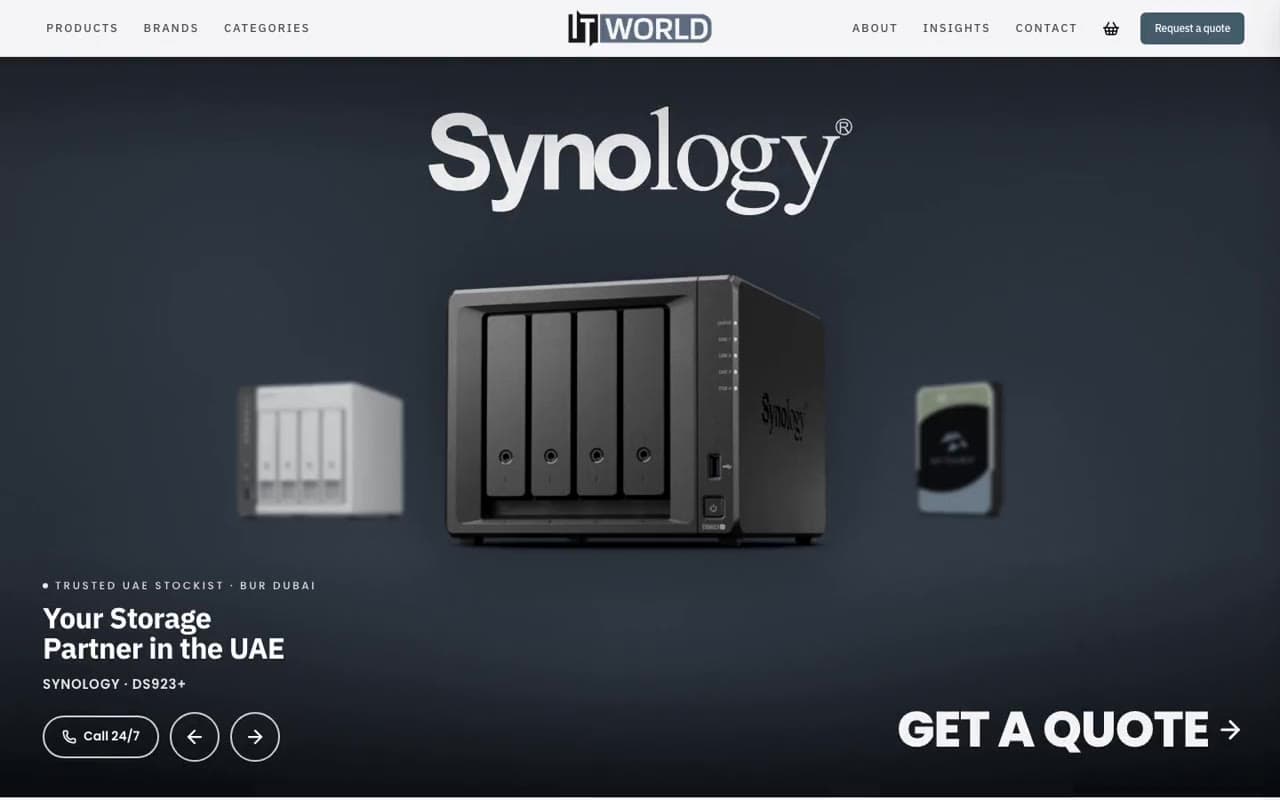
    The IT World Trading catalogue, built on this pattern, carries 649 products across 15 brands with a quote-led enquiry flow rather than public pricing, deliberately scoped that way for a B2B distributor. A competitor running a five-page brochure site with no real catalogue architecture cannot present that same depth or handle that same product volume.

    649 products across 15 brands

    Catalogue size

    Site catalogue, 8 Sep 2026

  3. 03 · How does it serve your company goals?

    Checkout or enquiry, whichever fits how you sell

    Some businesses need a full checkout; others, especially anything with variable pricing or a sales conversation before purchase, are better served by a quote-led enquiry flow, the approach used on the IT World Trading catalogue. We ask about your pricing model and sales process before scoping the flow, rather than defaulting every project to the same checkout pattern.

  4. 04 · How does it make your business more efficient?

    A CMS your own team can run

    The custom CMS is built so your team can add products, categories and landing pages without coming back to us for every change, and tracking is wired for ads from launch so campaign traffic is measurable from day one. Final scope and price are agreed on a call, published from AED 7,999, because catalogue size and integration depth are the two things that move an ecommerce build's real cost.

What's included

  • Custom CMS your team can run without us
  • Product catalogue with categories, filters and search
  • Landing pages for campaigns and categories
  • Checkout or quote-request flow
  • Tracking wired for ads from launch

How it works

  1. Discovery

    Typically 1 week

    Scope, sitemap and brand inputs gathered before any screen is drawn.

  2. Content and copy

    1 to 2 weeks

    Copy drafted against the agreed sitemap and reviewed with the client before design starts.

  3. Design

    1 to 2 weeks

    Wireframes, then high-fidelity screens in the tier's agreed visual system.

  4. Build

    2 to 3 weeks

    Next.js implementation, section by section, against the approved design file.

  5. QA and launch

    2 to 3 days

    Cross-device QA, a Lighthouse pass and DNS cutover to the live domain.

  6. Handover

    Launch day

    Credentials, a short walkthrough and documentation handed to the client.

Proof

IT World Trading interface capture

The catalogue site reached a perfect Lighthouse mobile score and pulled 11.1K search impressions in three months.

Questions

What does the from AED 7,999 price cover?

AED 7,999 is the published starting price for an ecommerce build: a custom CMS your team can run, a product catalogue with categories, filters and search, landing pages for campaigns and categories, a checkout or quote-request flow, and tracking wired for ads from launch. The final number moves from there based on catalogue size and integration depth, payment gateways, inventory systems or CRM connections, the same variables that separate a ten-product catalogue with a simple enquiry form from a multi-tenant product with account management and billing. Our own MAJ Leads product is the closest evidence of that operational depth: a multi-tenant lead-management build with an AI receptionist and WhatsApp follow-up, sold as a subscription rather than a traditional cart. We agree final scope and price on a call once we understand your catalogue and integrations, so the number you see before work starts is a real one, not a placeholder.

Do we get a full checkout or a quote-based enquiry flow?

It depends on your business. Some products, especially anything with variable pricing, custom configuration or a sales conversation before purchase, are better served by a quote-led enquiry flow, the same approach used on the IT World Trading catalogue for its 649 products across 15 brands, deliberately built with no public pricing and no checkout. Other businesses, selling a fixed-price product or subscription online, need a real cart and payment flow instead. Our own MAJ Leads product uses an account and subscription model rather than a traditional cart, which is its own valid pattern for a SaaS-style ecommerce build. We ask about your pricing model, sales process and whether a human needs to be in the loop before a sale closes, then scope the flow to match, rather than defaulting every project to the same checkout pattern.

What does the AED 999 AMC add?

The AMC is an optional maintenance contract at AED 999 a month, available alongside the Ecommerce build: uptime and error monitoring, framework and security patching on an agreed cadence, and a monthly change report, the same service described in full on the Website AMC page. A live catalogue with checkout or payment integrations carries more operational risk than a static brochure site, dependencies going unpatched is how most small sites eventually get compromised, so this is the build where an AMC matters most. It is optional: the site, domain and every login are still handed over to you at launch regardless, and nothing about taking the AMC changes that ownership arrangement. What it buys, in practice, is the difference between a problem caught quietly by monitoring overnight and the same problem a paying customer finds first, on their own.